Why Situ8 fits these roles
The same pattern shows up across jobs: the situation is messy, the clock is real, and disposable chat—including shared AI threads that still behave like scrollback—makes reconstruction, framing errors, and decision drift likely.
One case, not scattered chat
A single thread holds narrative, intake, and results—so you are not re-proving context every time you touch the work.
Structured intake before analysis
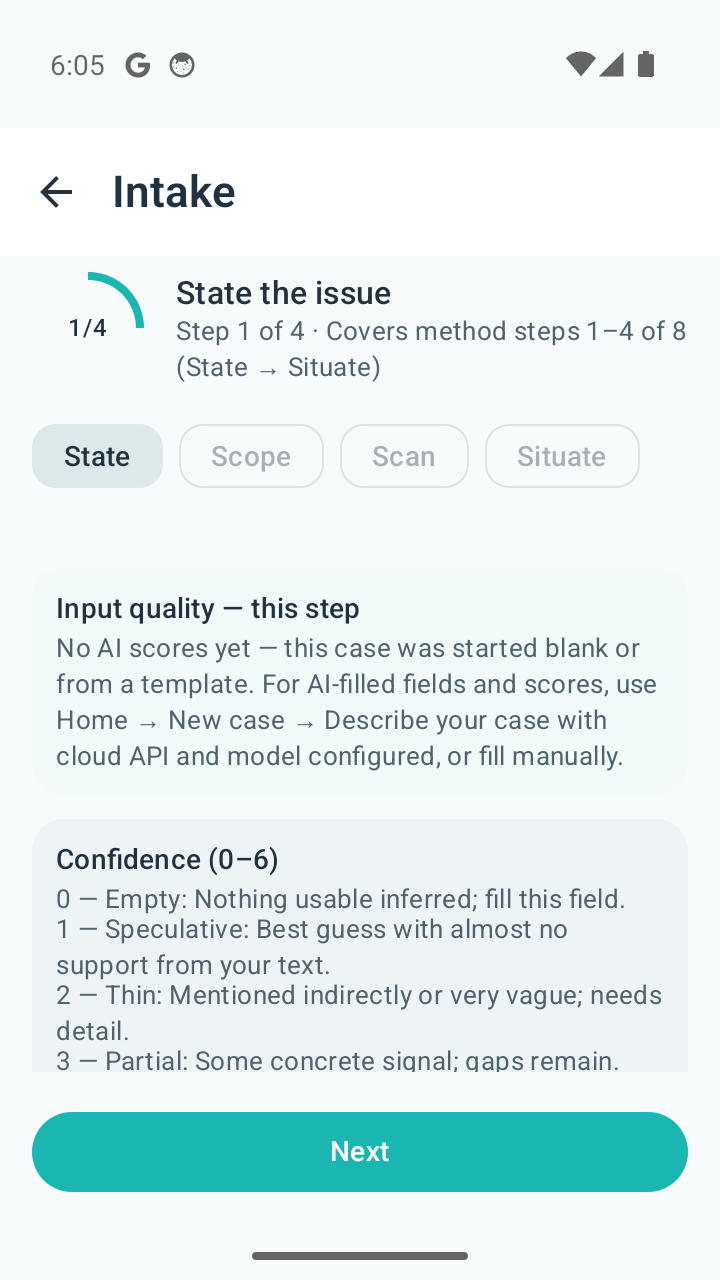
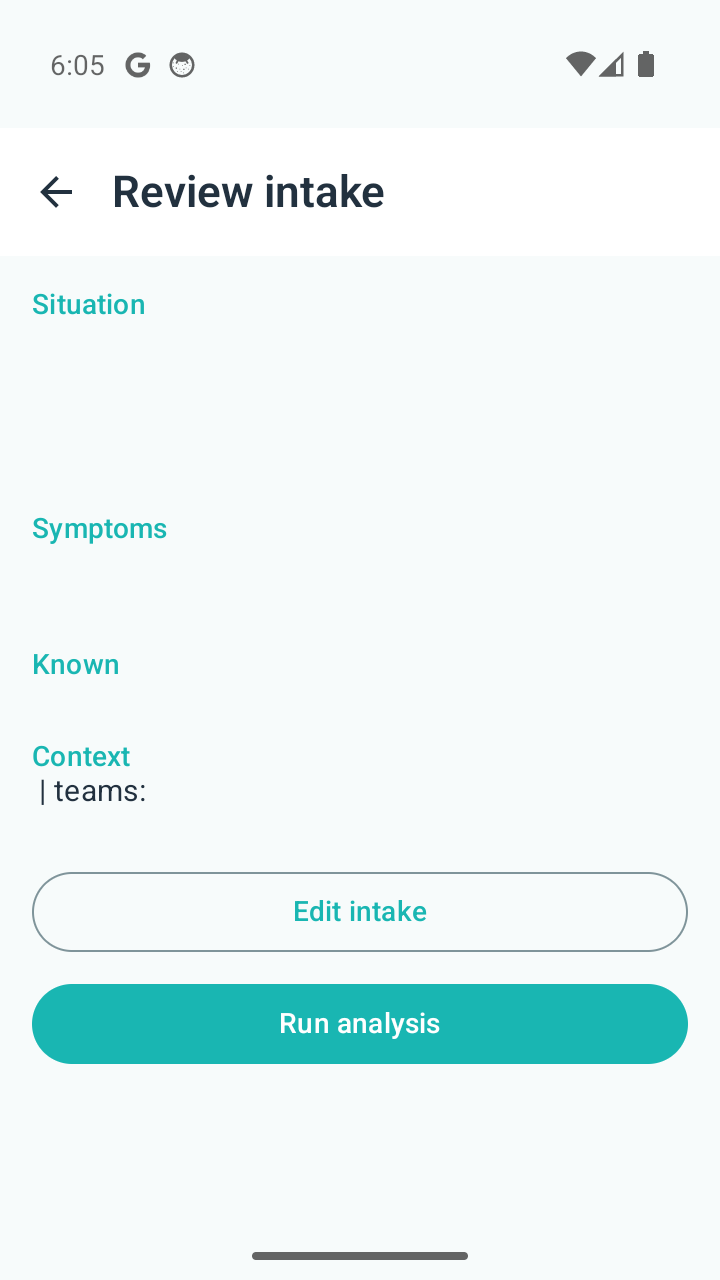
Grounding happens before the model runs, with a review step—so “analysis” is not a guess from a one-line prompt.
Judgment stays with you
Outputs are material to think with, not a verdict—especially where professional, medical, legal, or safety expertise belongs elsewhere.
Managers and team leads
Typical messy situations
- Conflicting signals from different channels, all labeled “urgent.”
- Unclear ownership: the issue sits between two leads, so work slows.
- Project stalls when “ship” and “stop” both sound reasonable.
- You need escalation readiness: a clear story before you pull in execs or other teams.
Why disposable chat threads break down
One-off threads are disposable by design. Context lives in scrollback and pasted snippets—so every new conversation re-opens the same arguments and the case never stays intact.
How Situ8 helps today
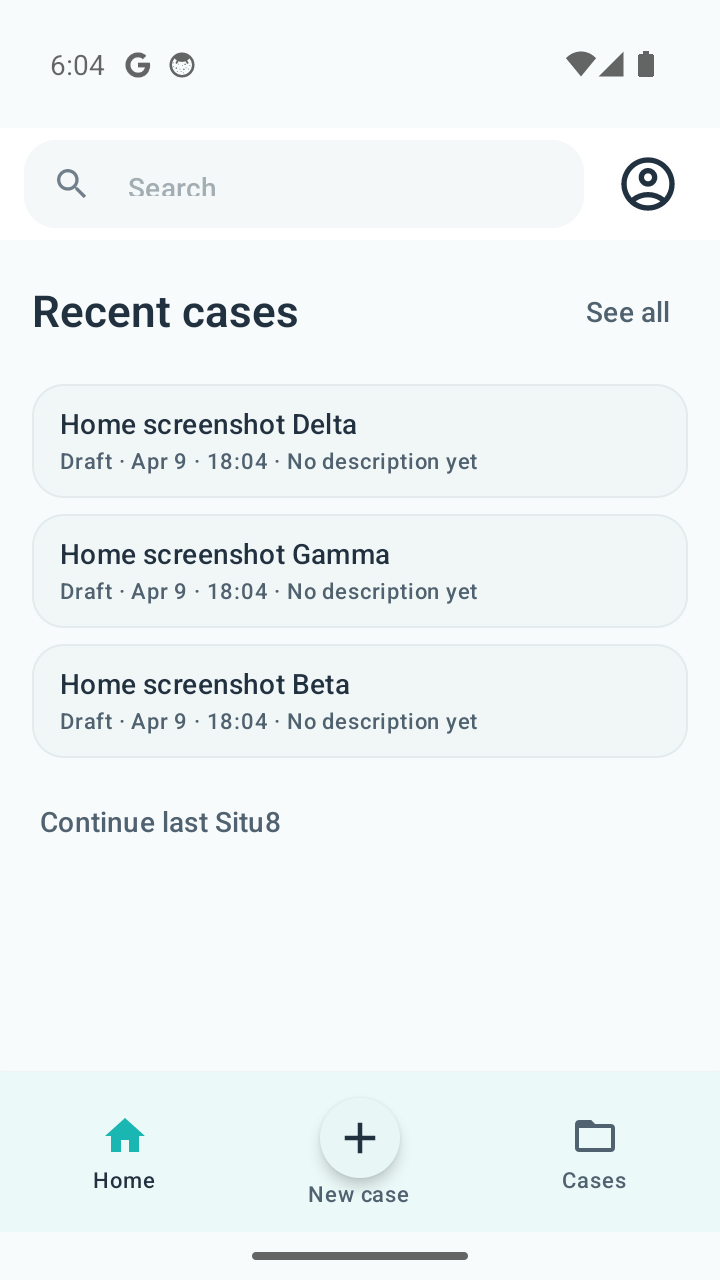
On Android, you run solo case work: one case per situation, guided intake, review, then analysis in a workspace tied to that case—so you can pressure-test what you think you know before you steer the group.
What this could become later
Shared cases in-app (Situ8 Team) are roadmap—not another chat workspace or generic “team workflows” SKU.
Example scenario
Two teams disagree on root cause. You capture facts and constraints in one case, run a structured read, and walk in with a framed story—not a transcript dump.